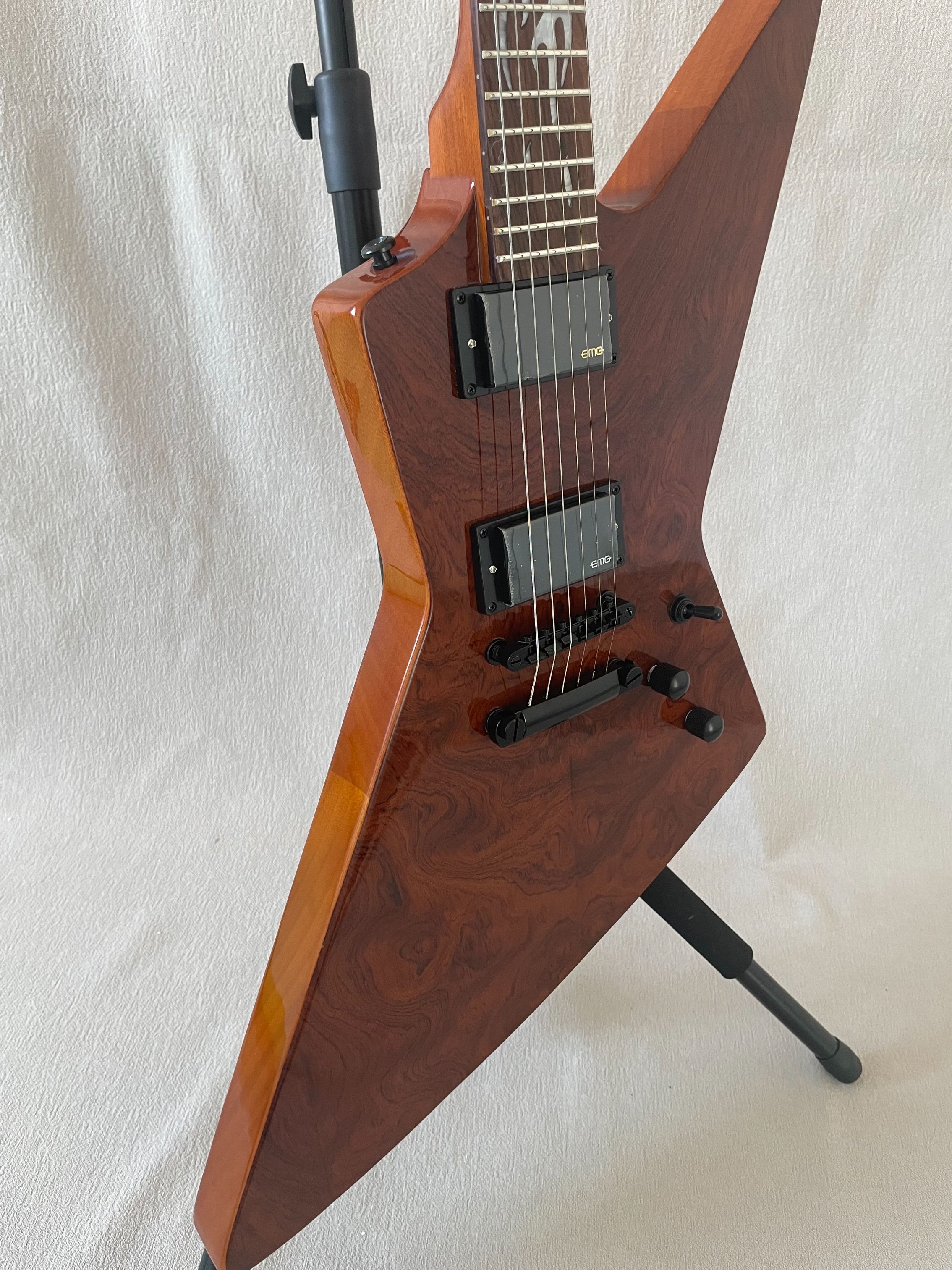
Crafting a custom guitar is more than assembling parts—it’s translating passion into resonance, identity into wood grain, and reverence into hardware placement. For generations of metal guitarists, no name embodies that fusion more powerfully than Dimebag Darrell Abbott. His aggressive tone, expressive vibrato, and unmistakable stage presence weren’t accidental; they emerged from deeply intentional instrument choices. Today, building a custom guitar—especially with an electric guitar kit—offers a rare opportunity to channel that same intentionality, not as imitation, but as evolution.
Whether you’re drawn to the searing sustain of a Dean ML or the raw immediacy of a stripped-down bolt-on, this guide walks you through every critical decision point in a thoughtful, repeatable build process.
Start with your electric guitar kit selection—not just for convenience, but for pedagogical value. Unlike pre-built instruments, kits expose the functional relationships between components: how neck angle affects string tension, how pickup cavity depth alters magnetic field geometry, and how bridge mass influences harmonic decay. Choose a kit with high-grade mahogany or alder bodies, roasted maple necks, and stainless steel fretwire—materials Dimebag favored for their clarity under high gain and resistance to wear during aggressive playing.
Avoid kits with pre-routed, non-adjustable tremolo systems if you plan to emulate his precise dive-and-return technique; instead, opt for a two-point synchronized tremolo with hardened steel block and locking tuners for tuning stability.
Next, consider electronics routing with purpose. Dimebag’s tone relied on tight low-end response and articulate mids—not just high-output pickups, but strategic filtering. Install a 500k audio taper volume pot with treble bleed circuitry to preserve high-frequency definition when rolling back volume—a subtle but transformative detail many builders overlook.
Add a push-pull pot for coil-splitting on the bridge humbucker, enabling single-coil bite for cleaner rhythm passages without sacrificing full-humbucker roar for solos. Wire it with cloth-covered 22AWG wire and hand-soldered joints to reduce microphonic noise and improve signal integrity.
Hardware selection deserves equal attention. Dimebag famously used Floyd Rose Originals, but modern builders benefit from upgraded alternatives: Gotoh GE1996T or Schaller Floyd Rose-style bridges offer tighter tolerances and improved sustain transfer. Pair them with locking tuners featuring 18:1 gear ratios for precise intonation control across all registers.
For fretwork, level, crown, and polish each fret manually—even on pre-fretted kits—to eliminate ghost notes and ensure even string contact. Use a radius block matching your fingerboard (12"–14") and verify with a straightedge and feeler gauges.
Finishing is where tribute becomes personal. Rather than replicating exact paint schemes, interpret Dimebag’s visual language: bold contrast, symbolic symmetry, and tactile texture. Try a satin nitrocellulose lacquer over flame maple for natural resonance and vintage patina development. Add hand-painted silver lightning bolts using automotive-grade enamel and fine liner brushes—then seal with matte clear coat to avoid glare under stage lights.
Include subtle nods: a small ‘D’ engraved on the truss rod cover, custom inlays shaped like guitar picks at the 12th fret, or a signature-style black chrome pickguard with beveled edges.
Finally, setup is non-negotiable. String with D’Addario NYXL .010–.052 sets, set action at 1.6mm (low E) and 1.4mm (high E) at the 12th fret, and intonate using a strobe tuner—not a smartphone app. Adjust spring tension until the bridge sits parallel to the body, then test dive depth and return accuracy across all six strings.
Play every note across all positions. Record clean and distorted tones. Compare frequency response using free spectral analysis tools. Refine until the guitar feels like an extension—not a tool, but a collaborator.
This isn’t about recreating history. It’s about continuing it—with craftsmanship, respect, and your own unmistakable voice.